Bench, Seat or Leaning Rail: Matching a Pause to a Place
Choose a bench, seat or leaning rail for a shared outdoor space by matching its setting, likely pause length and users’ needs to the right kind of support.
A bench, seat or leaning rail changes how people use a shared outdoor space. The right choice depends less on appearance than on the pause a place invites: a long rest, a brief wait, or a moment’s support while standing. Match the furniture to that ordinary scene and it is more likely to feel useful rather than merely installed.
Start by watching the place at different times. Notice where people stop, what they face, whether they carry bags or push prams, and how long they tend to stay. Those small observations point towards a fitting pause without turning a seat into a monument or a barrier.
A bench gives a longer pause a place to settle
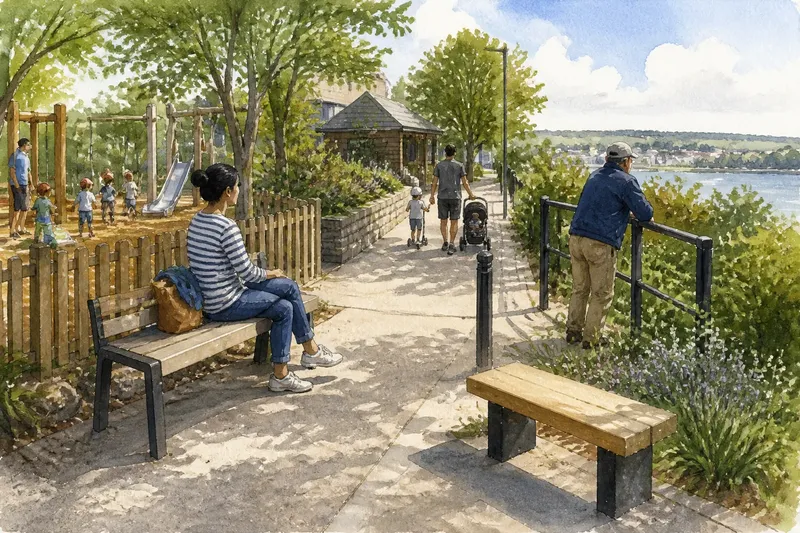
A bench suits a spot where people may want to sit for a while: beside a playing field, along a waterside path, in a pocket park or near a community garden. Its length can make room for companions, while an open end may leave space for someone arriving alone. The setting should offer something worth facing, such as a view, a busy path or a patch of shade.
Consider the approach as carefully as the seat. A bench tucked behind planting may feel quiet but hard to notice. One placed close to a narrow path can make passing awkward. Leave a clear route around it, and think about whether people can reach it without crossing mud, loose gravel or a steep verge.
Backrests and armrests affect who can use a bench comfortably. A backrest supports someone settling in; armrests can help people lower themselves and rise again. They also divide the seat into smaller places, which may be helpful in a crowded waiting area but less welcoming where people need room for a wheelchair companion, a child or a large bag. The actual design should suit the people and route around it.
A short seat suits a stop with a clear purpose
A compact seat works well where people pause briefly but still benefit from sitting: outside a public building, near a crossing, beside a bus stop or at the entrance to a shared garden. It takes up less room than a long bench and gives a clear place to wait without suggesting that the spot is intended for a lengthy stay.
Its small footprint does not make placement automatic. A seat squeezed between a door and a path can obstruct both. Check sightlines from nearby entrances and keep the approach legible. People should be able to sit without blocking others who are queuing, entering or passing.
One seat may suit a quiet entrance; a pair can make conversation easier, provided they do not create a bottleneck. A seat facing a wall may feel like an afterthought, while one turned towards a garden bed or street activity gives the pause a point. Orientation is a simple design choice with a noticeable effect on whether people choose to stop.
A leaning rail supports standing without asking for a full stop
A leaning rail offers a light resting point for someone who wants support but prefers to remain standing. It can suit a viewpoint, a busy promenade, a queue beside a community facility or a narrow place where a bench would consume too much of the usable space. The rail invites a shorter, more flexible pause.
It is not a substitute for a seat. People who need to sit, transfer from a mobility aid or rest for longer need an accessible seating option nearby. A rail can complement a bench or short seat, offering more than one way to pause; on its own, it serves a narrower set of needs.
Check how the rail meets the ground and how people approach it. A position that forces someone to lean into the flow of pedestrians is poorly placed, even if the object itself is well made. In a queue, leave room for people to move along without brushing against those using the rail.
Match the pause to the place before choosing the object
Imagine a neighbourhood path beside a small play area. Caregivers often stop near the entrance to watch children, while walkers pass through and some visitors pause at a nearby view. A short seat facing the play area could serve the watchful pause, while a separate leaning rail at the viewpoint could suit people who stop briefly. If the entrance is too narrow for either, the better decision may be to place seating farther along, where it does not interrupt the route.
This imagined scene shows why counting likely uses matters more than choosing a familiar shape. Ask who might use the spot, what they would be doing, and whether they need company, a view or quick access back to the path. Then check the space at busy and quiet times; an arrangement that feels generous when empty may crowd the route when people gather.
Look beyond the person sitting. A companion may stand beside a bench, a child may need space to turn, and someone using a wheelchair may want to join a group without being parked behind it. Leave room for these different positions rather than treating the seat’s footprint as the whole occupied area.
What should a neighbourhood group ask before choosing?
How long are people likely to pause here?
A brief wait near an entrance may call for a compact seat, while a path beside a garden may invite a longer rest. If people mainly want a moment’s support while standing, consider a leaning rail as an addition rather than the only option.
Will the furniture narrow the route?
Look at the full space people use to approach, pass and gather, not only the patch beneath the object. If a seat would pinch a path or interfere with a doorway, move it to a wider edge or choose a less intrusive arrangement.
Who might be left out by this choice?
Consider people who need a backrest, help rising, room beside them or a nearby place to sit rather than lean. A mix of options may suit more users, but only if each one has a clear, accessible approach.
What will keep the pause pleasant?
Notice sun, shade, wind, nearby activity and what people will face while stopped. A well-positioned seat can make a modest corner inviting; a handsome one pointed at a service gate is unlikely to do the same.
Material and upkeep should fit the local setting
Timber can feel warm and familiar, while metal or recycled-plastic components may suit a different civic setting. The useful question is how the material will fare with local weather, use and maintenance capacity. Consider whether the surface is comfortable in sun or cold, whether dirt is easy to remove, and whether replacement parts can be obtained without replacing the whole object.
Inspect the surrounding ground as part of the choice. A seat beside a tree may need space for roots and leaves; a rail at a coastal or exposed site may face harsher conditions than one in a sheltered courtyard. Ask whoever maintains the space what routine care is realistic, then choose a design whose fixings and surfaces they can inspect. Follow the product instructions and local requirements for installation and accessible routes.
Make the decision visible to the people who use the place. A simple sketch showing the proposed position, approach and nearby route can prompt useful comments before anything is ordered. Ask residents what kind of pause they actually need, then adjust the location or mix of objects to reflect the answer. For a bench, seat or leaning rail, good placement is not decoration; it is the part that makes the pause fit the place.